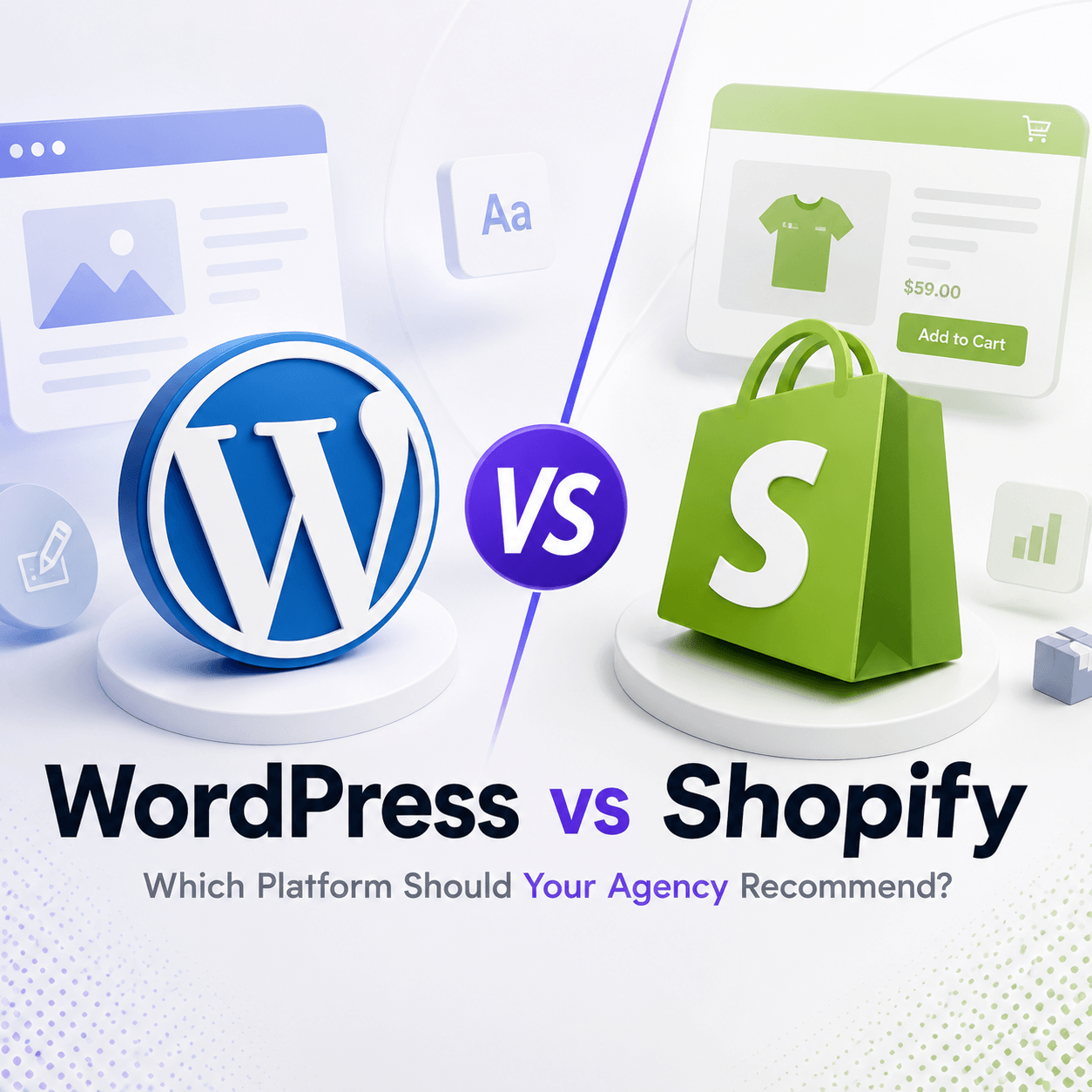
Agencies lose deals — and sometimes clients — over this decision more often than they realize. Pitch the wrong platform, and 12 months later you're having an uncomfortable, unbillable conversation about re-platforming.
Here's the framework we use with our own partner agencies before any build starts.
Clients rarely know to ask "should this be WordPress or Shopify?" — they trust the agency to already know. Getting it right the first time protects your credibility and your client's budget.
Blogs, resource libraries, SEO-driven service pages — WordPress's content architecture is built for this in a way Shopify isn't.
If a client has specific, non-standard layout requirements, WordPress (with a capable dev team) offers more flexibility than Shopify's theme-based structure.
WordPress typically avoids ongoing platform fees, which matters for clients who want a lower total cost of ownership after launch.
If the client's entire business model is selling products online, Shopify's purpose-built commerce infrastructure (checkout, inventory, payments) outperforms a WordPress + plugin stack.
Shopify is hosted and managed — no worrying about plugin conflicts, security patches, or server uptime. Ideal for clients without in-house technical staff.
Shopify's app ecosystem and infrastructure hold up better as SKU count and order volume grow.
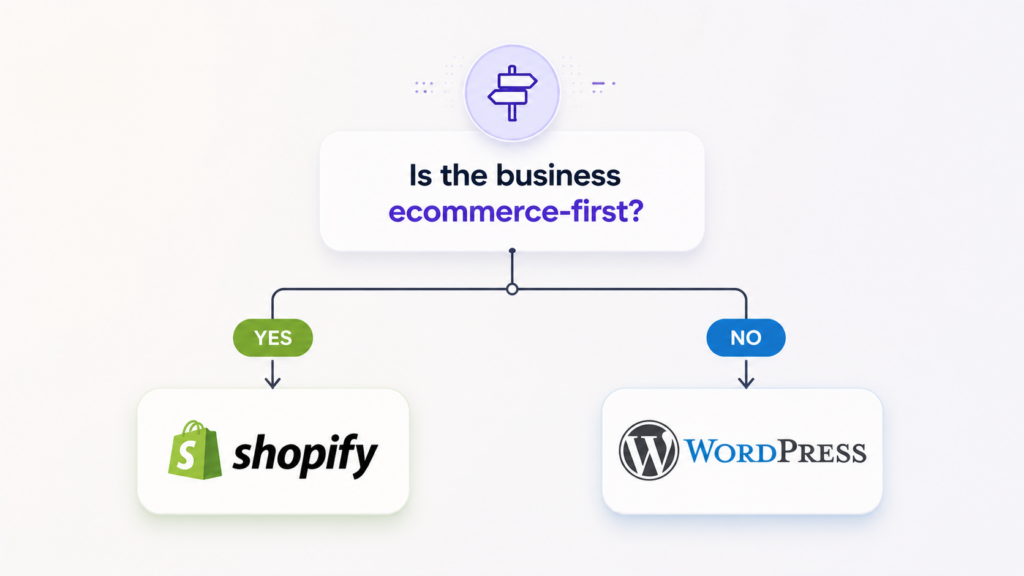
Ask three questions before recommending a platform:
The most common failure pattern: a growing ecommerce brand gets built on WordPress + WooCommerce because "that's what we know," then hits performance and maintenance walls a year later — forcing an expensive, disruptive re-platform to Shopify. The reverse also happens: content-heavy businesses forced into Shopify's rigid structure end up fighting the platform for basic blog functionality.
Both scenarios are avoidable with the right question asked at scoping, not after launch.
We build white-label on both WordPress and Shopify, which means agencies don't have to force every client into whichever platform their in-house team happens to know. If you're not sure which way to steer a prospect, we're happy to weigh in before you pitch — no cost, no obligation.