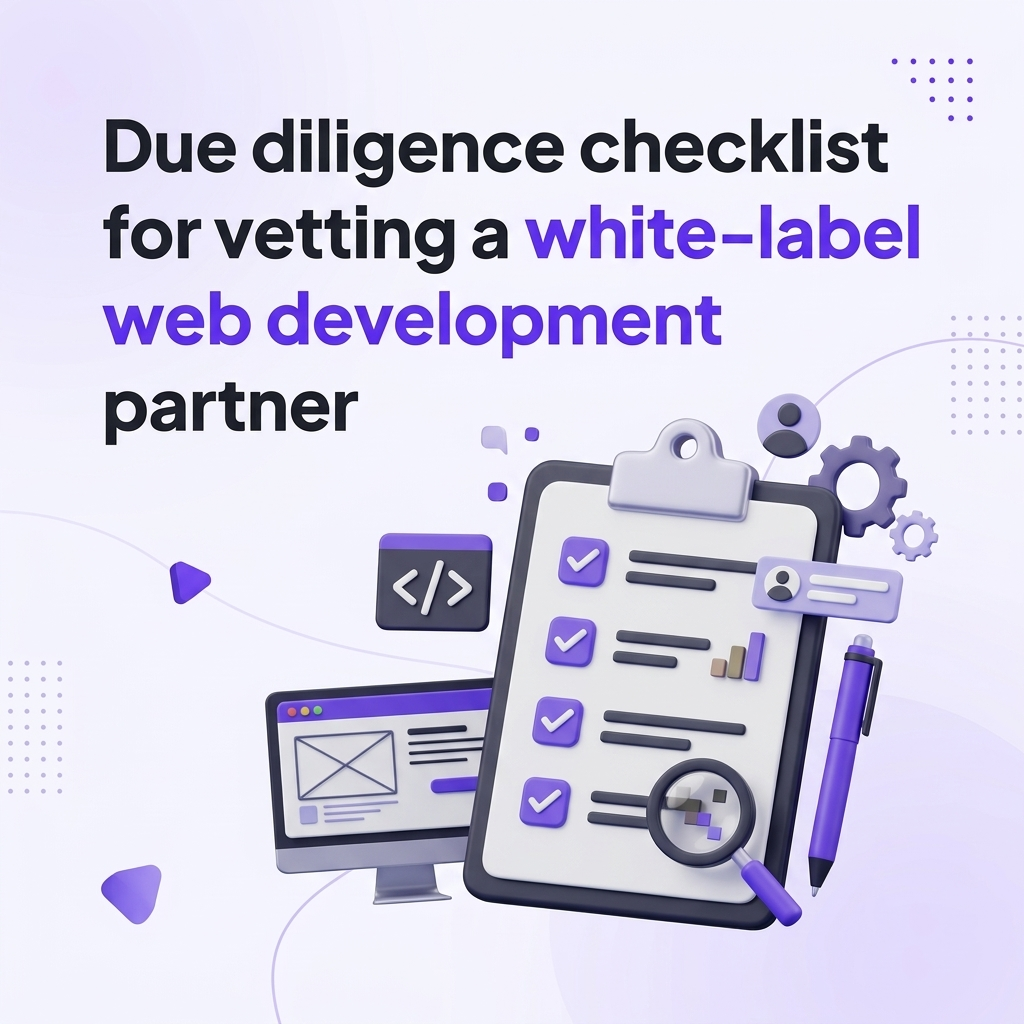
Picking the wrong dev partner doesn't just cost you a project — it can cost you the client relationship you spent months building. This is the checklist we'd want if we were on the agency side making this call.
A bad in-house hire is expensive but visible — you know within weeks if it's not working. A bad white-label partner is quieter and more dangerous: problems often surface only after the client notices something's wrong, by which point your reputation is already on the line.
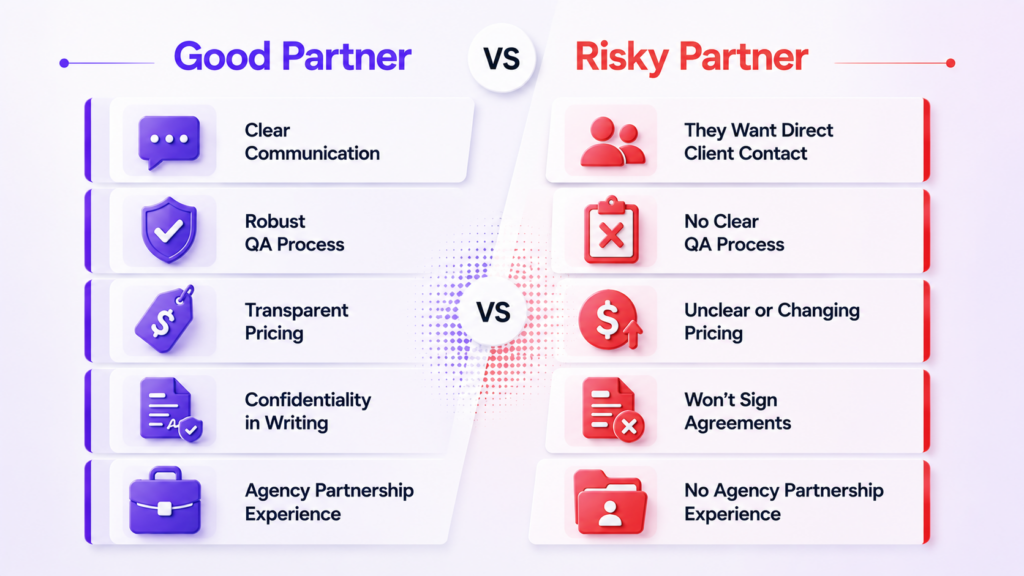
A partner whose main business is direct-to-client work often isn't built for white-label norms — confidentiality, reseller pricing, and staying invisible in communication.
Ask them to describe it in detail. Vague answers usually mean the QA burden quietly falls back on you.
You want structured updates you can pass along to clients — not radio silence followed by a rushed delivery.
Get this in writing. Their name, branding, or code comments should never be visible to your client under any circumstance.
Ask for anonymized examples of past agency partnerships specifically — not just general portfolio work.
A serious partner has a clear post-launch support process. If the answer is unclear, that's a liability you'll inherit.
Both models work, but you want pricing that scales predictably with your project volume, not one that penalizes you for growth.
The best white-label relationships feel almost uneventful — sprints get planned, builds get delivered, QA happens before you ever see the link, and your client never has a reason to ask who actually built the site. That quiet reliability is the entire point.
Digital Kalakari works exclusively white-label with agencies — full confidentiality, structured sprint communication, and a QA process we're happy to walk you through before you commit to anything. (New to white-label altogether? Start with our complete guide to white-label web development.)