“We’ll just hire another developer” is usually the default answer when an agency’s dev team gets stretched. It’s rarely the fastest — or cheapest — one.
Here’s how to tell if what you actually need is more capacity, not more headcount.
Hiring feels like the “real” solution because it feels permanent. But permanence is exactly the problem when your workload fluctuates project to project — you end up paying full-time costs for part-time-shaped demand.
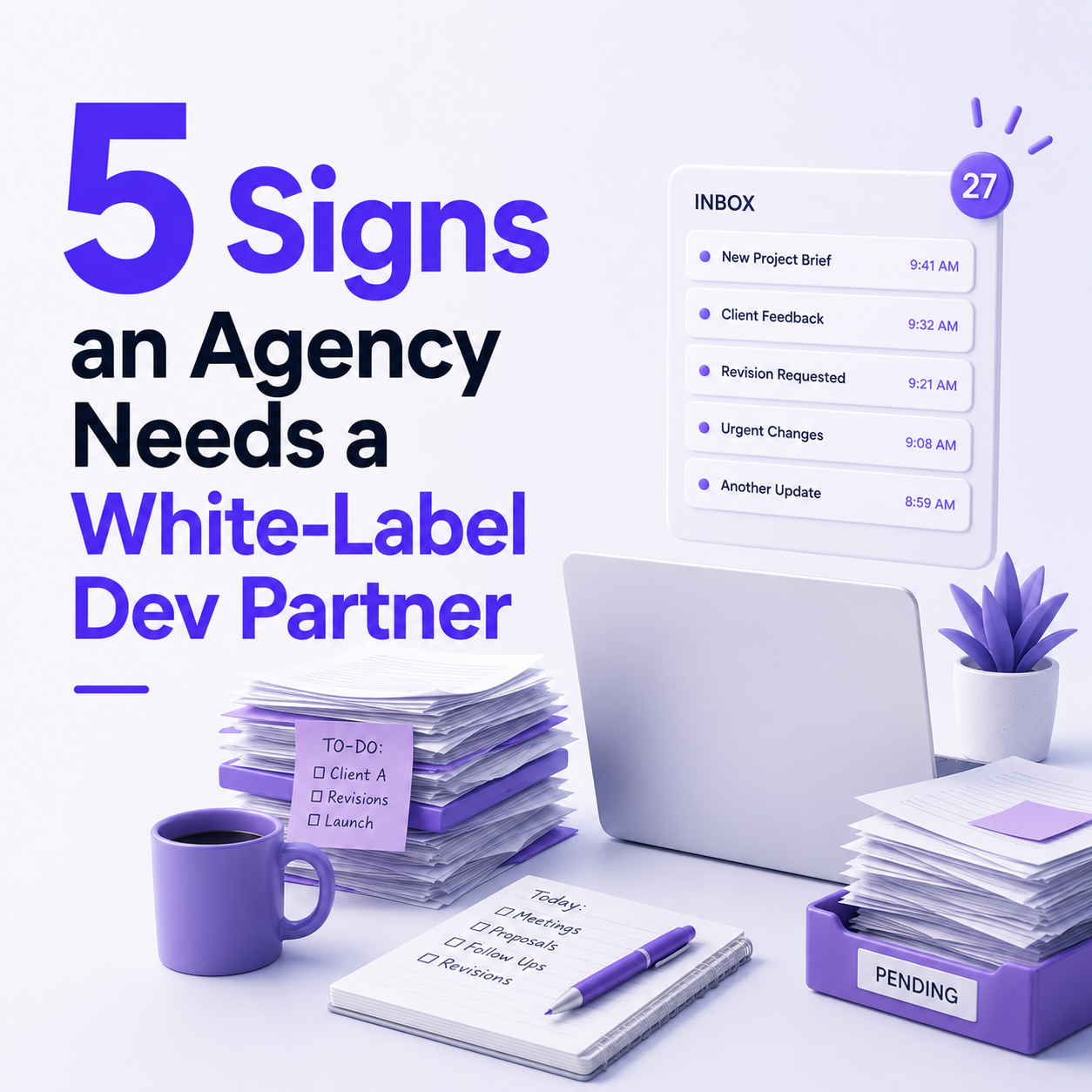
A single missed deadline is a fluke. A pattern of small slips across multiple projects is a capacity problem, not a scheduling problem — and it compounds every time you take on new work.
If your most capable project manager spends their week chasing ticket updates and translating technical blockers instead of running client strategy, that’s a very expensive use of their time.
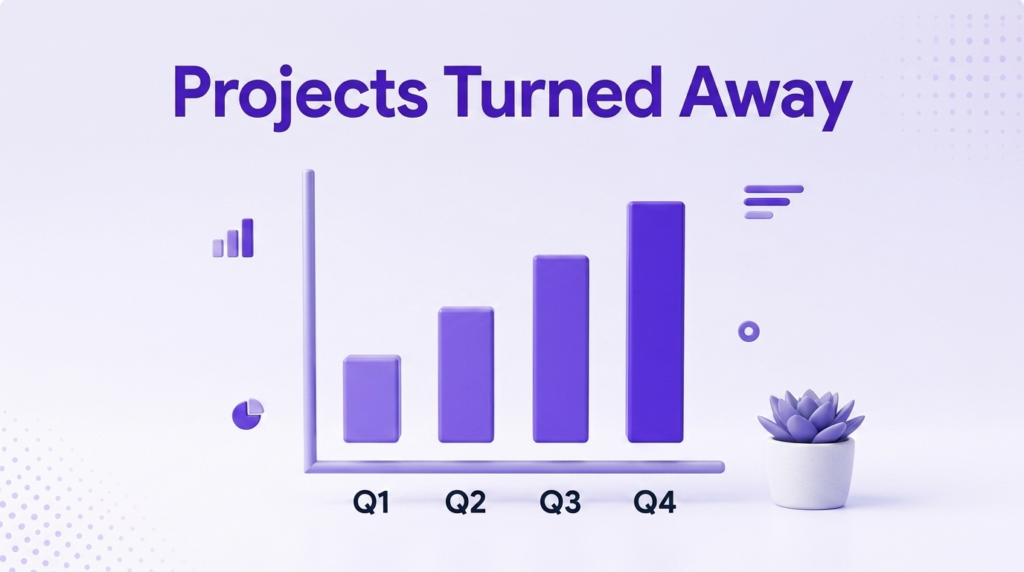
This is the clearest signal of all. If good-fit briefs are getting a “we’re at capacity” response, you’re leaving revenue on the table that a flexible dev partner could absorb.
If your entire build pipeline depends on one or two in-house developers, you’re carrying concentrated risk.
A single resignation shouldn’t be able to threaten every active client project.
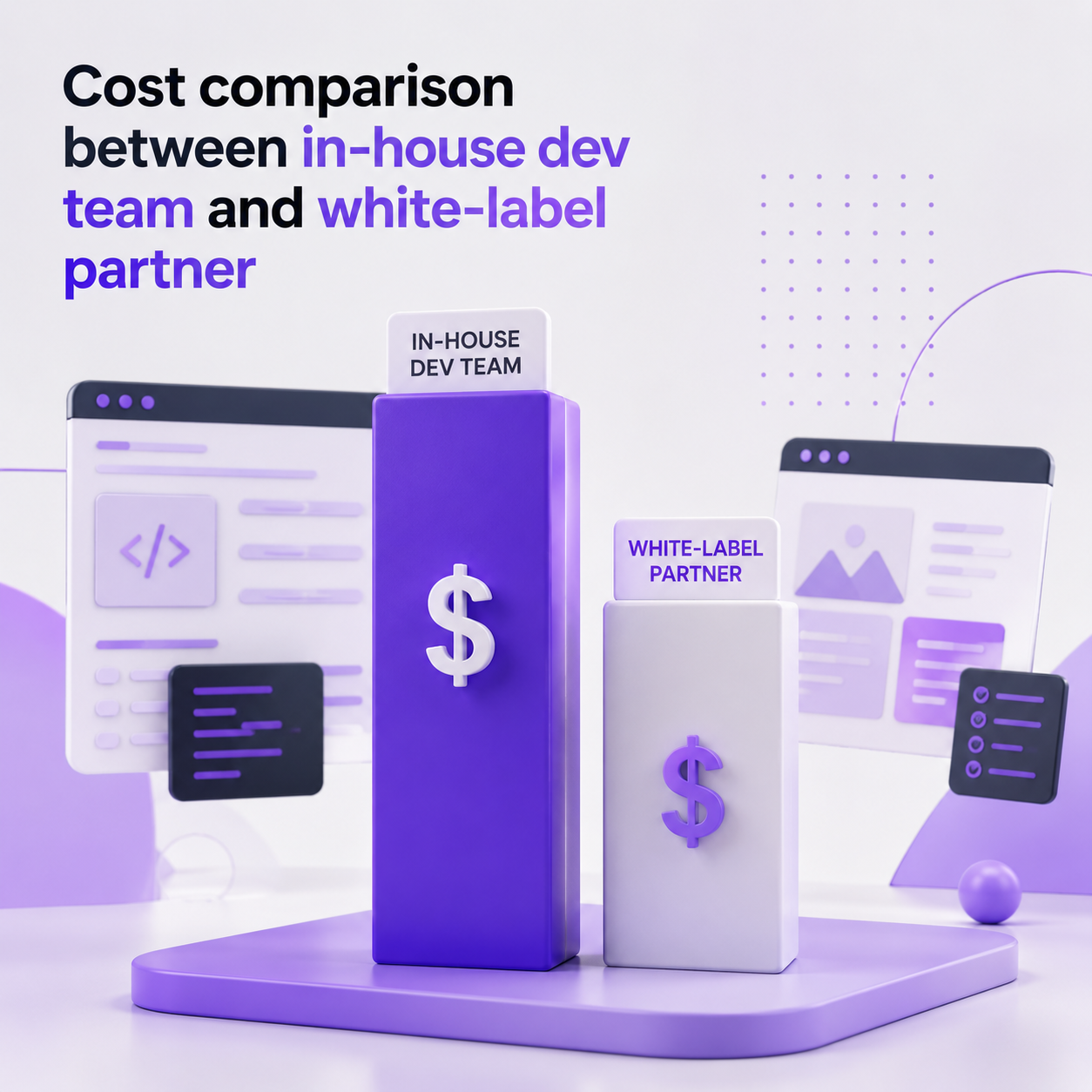
Once you factor in time-to-hire, often 2–4 months, along with salary, benefits, tooling, and management overhead, the numbers can add up quickly.
Compare that with a white-label partner that scales with actual project volume. The math frequently favors partnering, especially for agencies without a consistently high development workload.
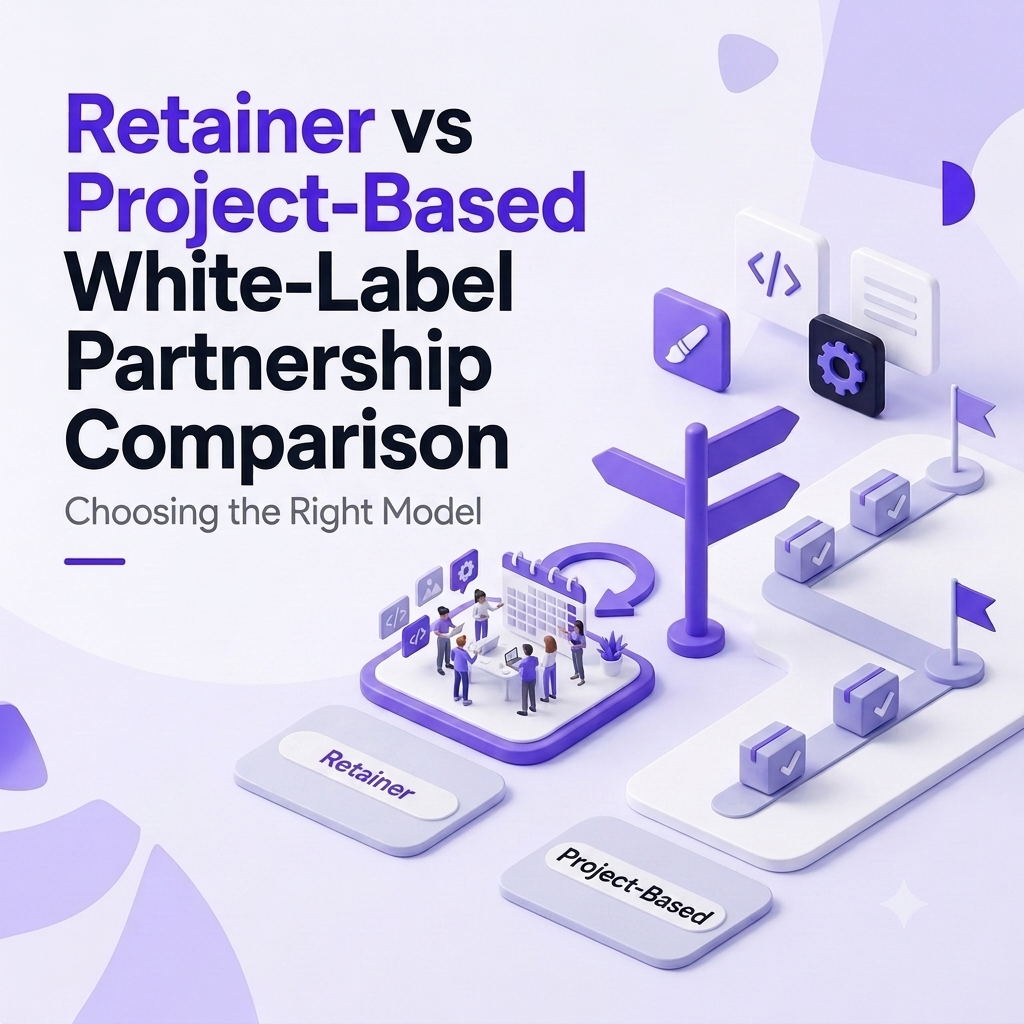
Start with a single project, not a full retainer.
Bring in a white-label partner on one client build and evaluate the communication, QA, and turnaround. Then decide whether you want to expand the relationship.
This gives you a real-world trial without the commitment and overhead of a new hire.
We work as an on-demand white-label development bench for agencies — handling WordPress and Shopify builds fully under your brand, with structured sprint updates and QA before anything reaches your client.
No hiring cycle. No idle payroll between projects.
If you’re new to the model entirely, our white-label web development guide covers how the relationship works from start to finish.
Get in touch and hand us your next overflow project — no retainer required to start.