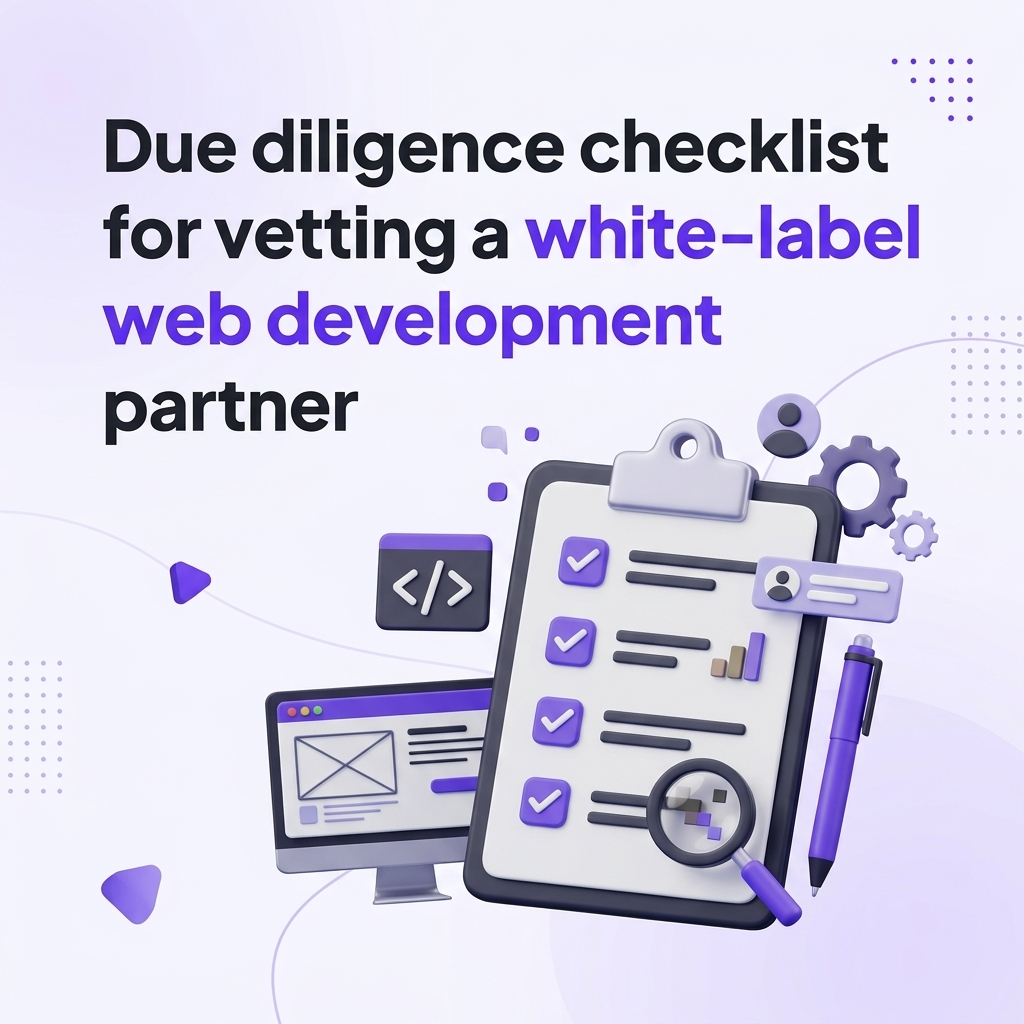
Hiring the wrong white-label partner is quieter than a bad in-house hire, and often more damaging, since the first sign of trouble is usually your client noticing something's off. Here's what real due diligence looks like.
You can't manage a white-label partner the way you'd manage an employee. There's no daily standup, no direct oversight of how they work. Vetting upfront has to do the job that ongoing management usually does.
A partner whose main clients are direct businesses, not agencies, often isn't built for white-label norms like confidentiality and reseller pricing.
Ask them to walk you through it in detail. A partner who can't clearly describe their QA checklist is telling you that responsibility falls on you instead.
Not just portfolio pieces, actual references from agencies they've partnered with repeatedly. Ask to speak with one if the relationship matters enough.
Get this in writing. Their name, branding, or code comments should never surface anywhere your client can see.
You want structured updates you can pass along, not a black box until delivery.
"What happens if a client finds a bug after launch?" tells you whether they have a real post-launch process.
"How do you price rush projects?" tells you whether their pricing is principled or improvised.
"Can I talk to another agency you work with?" tells you fast whether they're actually built for this model.
Before committing to a retainer, run one project through a new partner. You'll learn more about their communication, QA, and reliability from one real build than from any sales call.
We'd rather answer these questions upfront than have you find gaps after signing. (If you're comparing platforms for that first project, our white-label web development guide is a good starting point.)