If you run a marketing or design agency, you've probably had this conversation with a client: they love your strategy, your branding, your creative — and then they ask if you can also build the website. Saying no costs you the deal. Saying yes without the dev capacity to back it up costs you your reputation. This is exactly the gap white-label web development is built to close.
White-label web development is when an outside team builds websites on your agency's behalf — under your brand, with no client-facing involvement from them. You scope the project, present the strategy, and manage the relationship. The white-label partner handles the technical build in the background. The client only ever sees your agency. The invoice comes from you. The support requests go to you. The white-label developer is invisible by design.

Hiring a full-time developer typically takes 2–4 months and locks in fixed payroll costs regardless of project volume. White-label partners scale with your workload instead of against your cash flow.
Agencies lose clients over missed deadlines more often than missed creative. A white-label dev bench gives you capacity to absorb a tight launch date without derailing every other project on your plate.
Agencies that only do branding or marketing can add web development, Shopify builds, or UI/UX to their service list — without building an internal dev team from scratch.
You share the brief, brand guidelines, and any design assets. The white-label partner builds against that scope — no direct client contact, no branded communication on their end.
Good partners give you structured updates (sprint check-ins, staging links, timelines) so you always know what to tell your client, without having to chase status yourself.
Delivery Before anything reaches your client, it should go through QA — cross-browser and cross-device testing, broken-link sweeps, performance checks. This step is what protects your agency's name.
Most agency client work falls into one of two buckets: content-driven sites (WordPress) or ecommerce storefronts (Shopify). A capable white-label partner should build confidently on both, since steering a client toward the wrong platform is a common — and expensive — mistake.
A partner who primarily works with agencies understands confidentiality, white-label communication norms, and reseller pricing — a partner who mostly serves direct clients often doesn't.
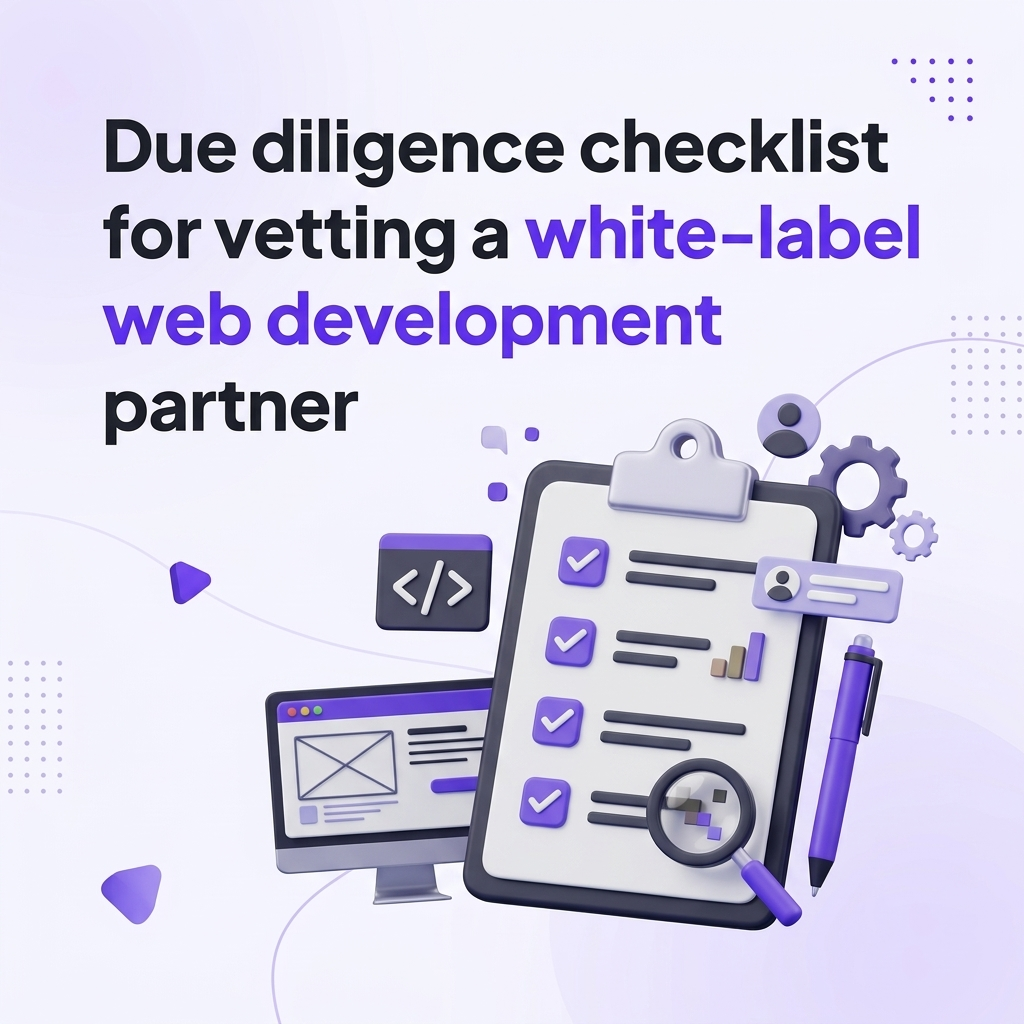
If they can't clearly describe their quality-control checklist, that's a signal the responsibility for catching bugs falls on you.
Your white-label partner should never appear in client-facing communication, credits, or code comments. Ask this directly before signing anything.
"Will the client find out?" Not if the partner is genuinely built for white-label work — no branding in code, no direct emails, no surprise CC's.
"Will quality suffer?" Only if you pick a partner without a real QA process. This is the single biggest differentiator between a good and bad white-label relationship.
"Isn't it cheaper to just hire?" Usually not, once you account for time-to-hire, benefits, tooling, and the risk of paying a salary during slow months.
If your team is turning away web projects, stretching PMs thin on dev triage, or hesitant to promise timelines you're not sure you can hit — white-label development is worth testing on a single project before you commit to a full retainer.